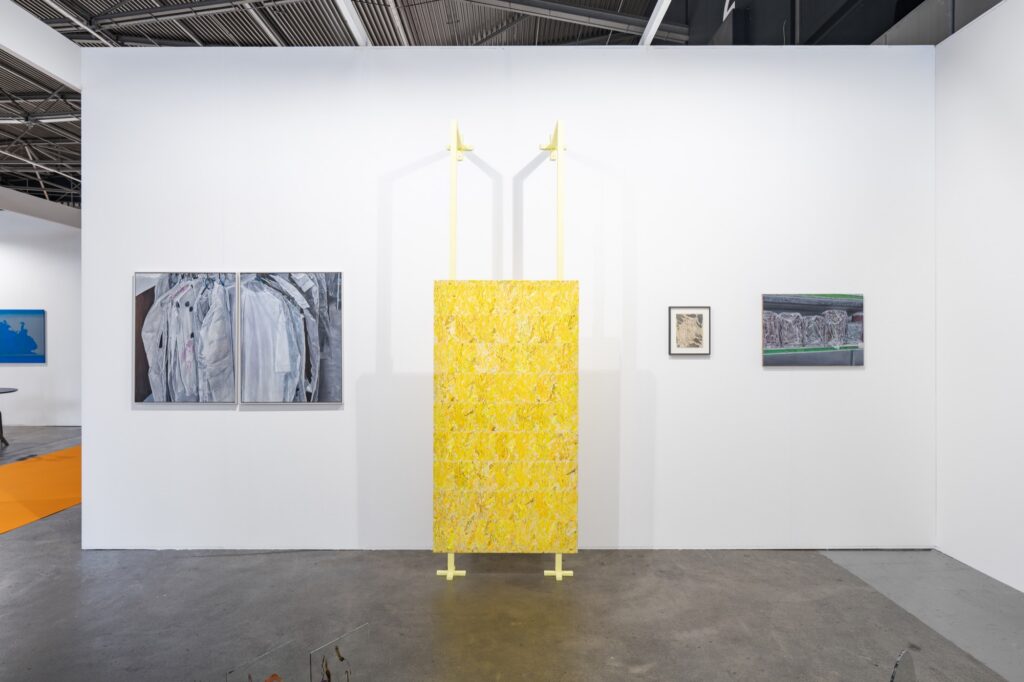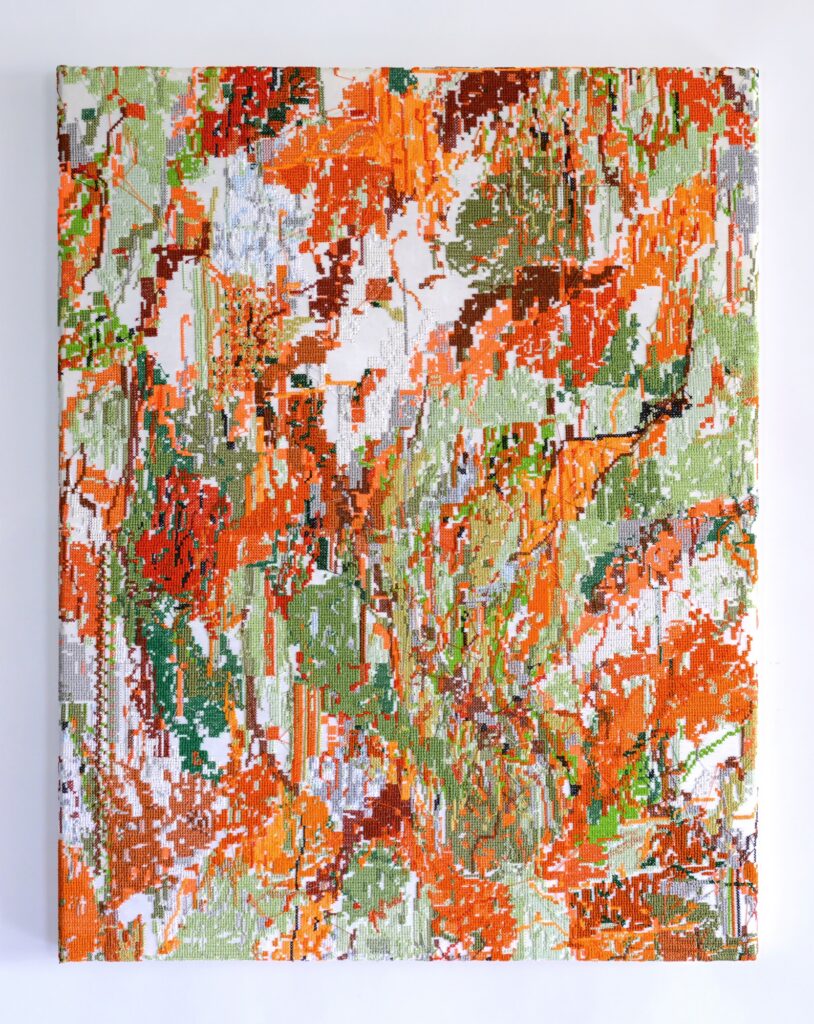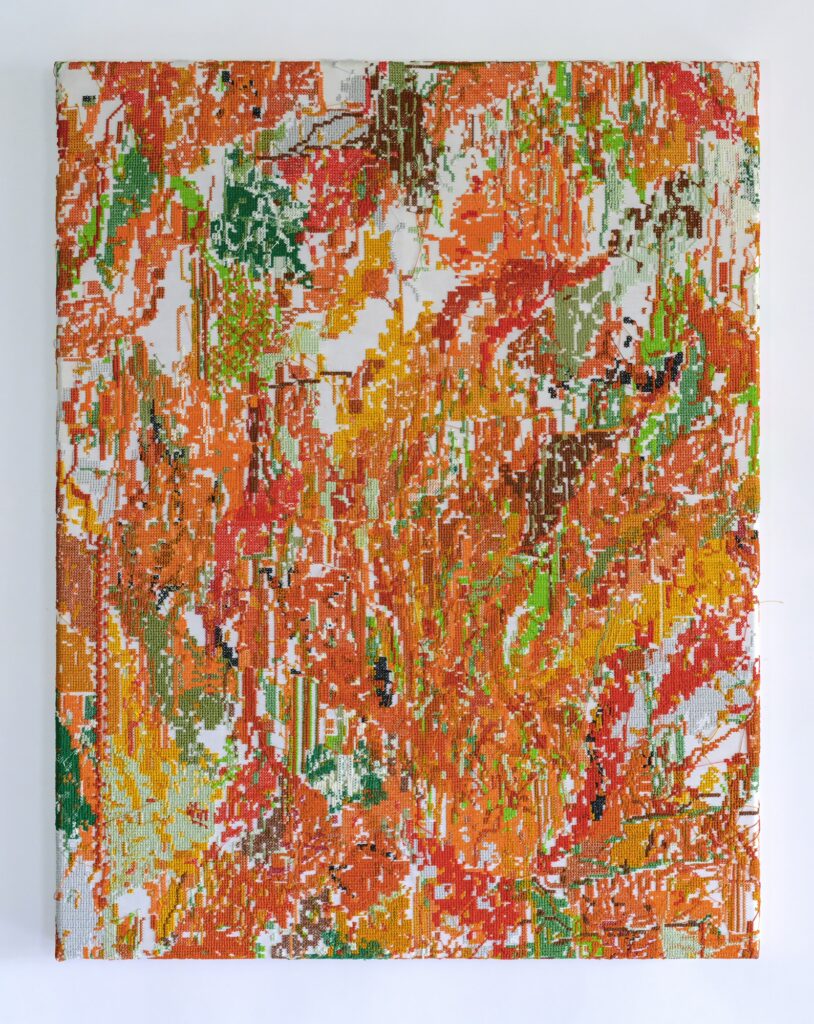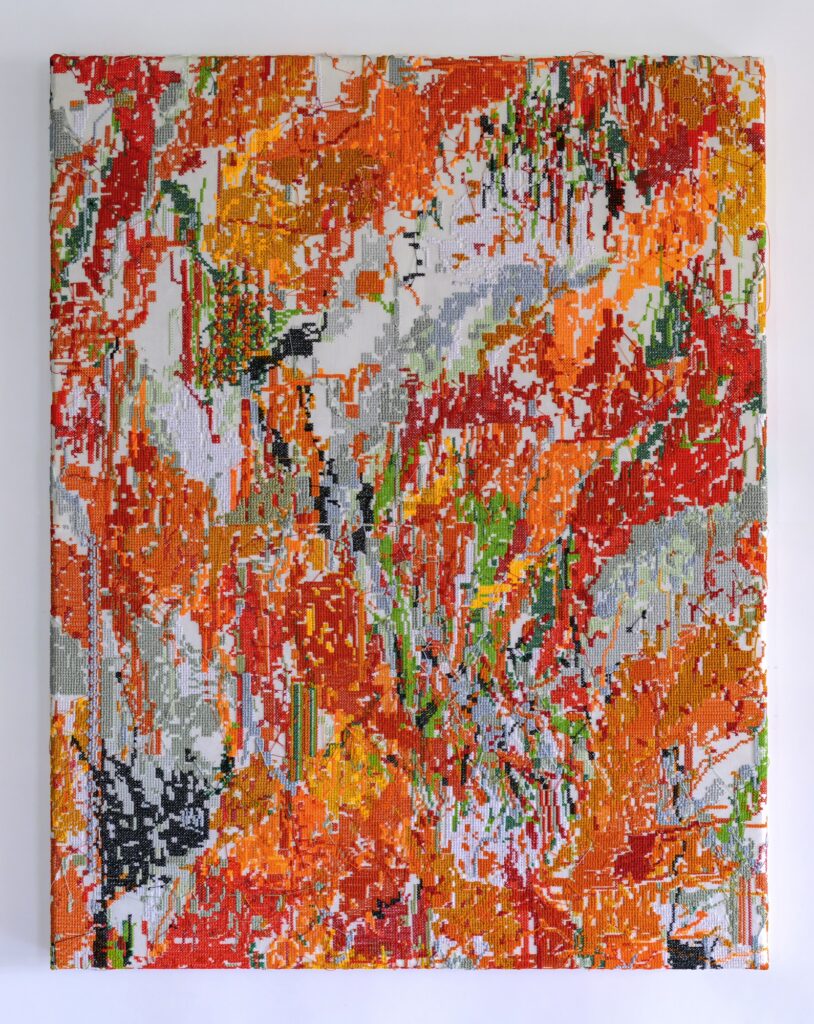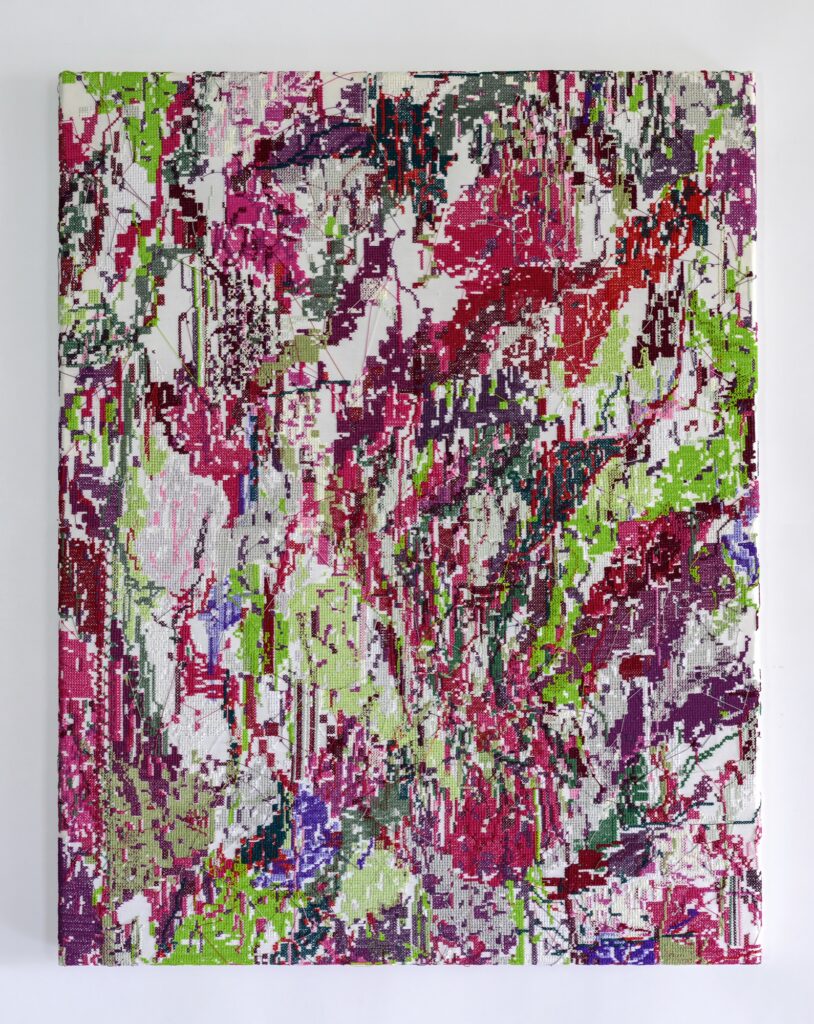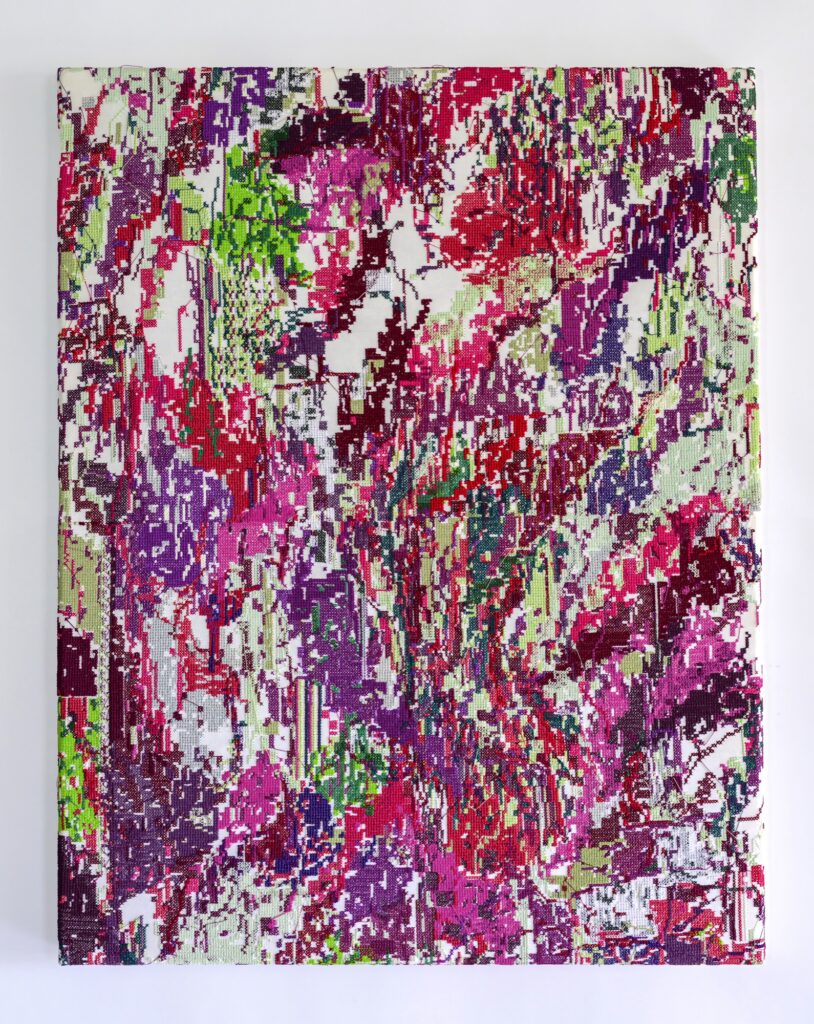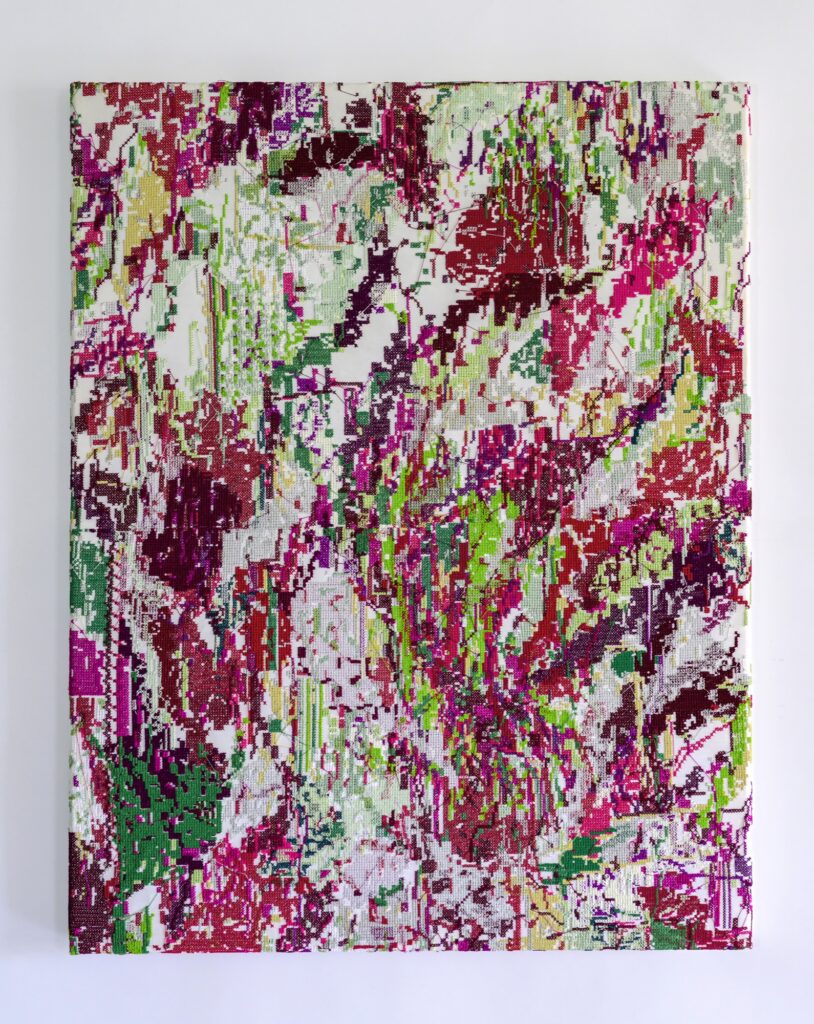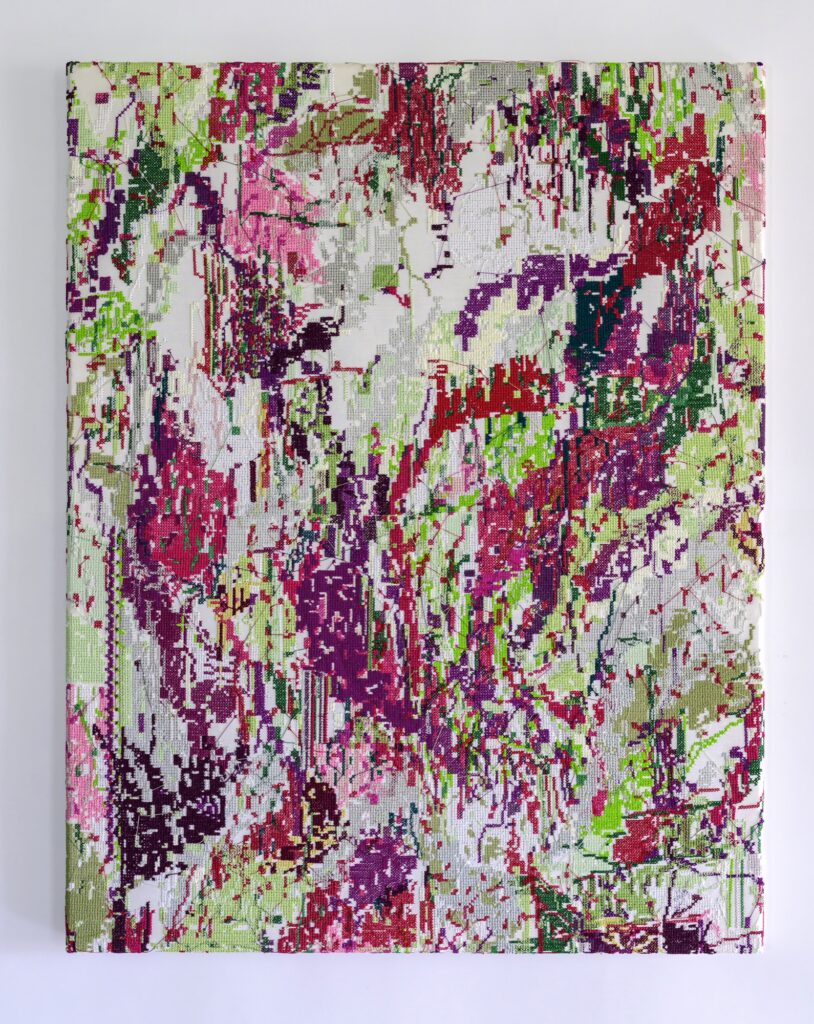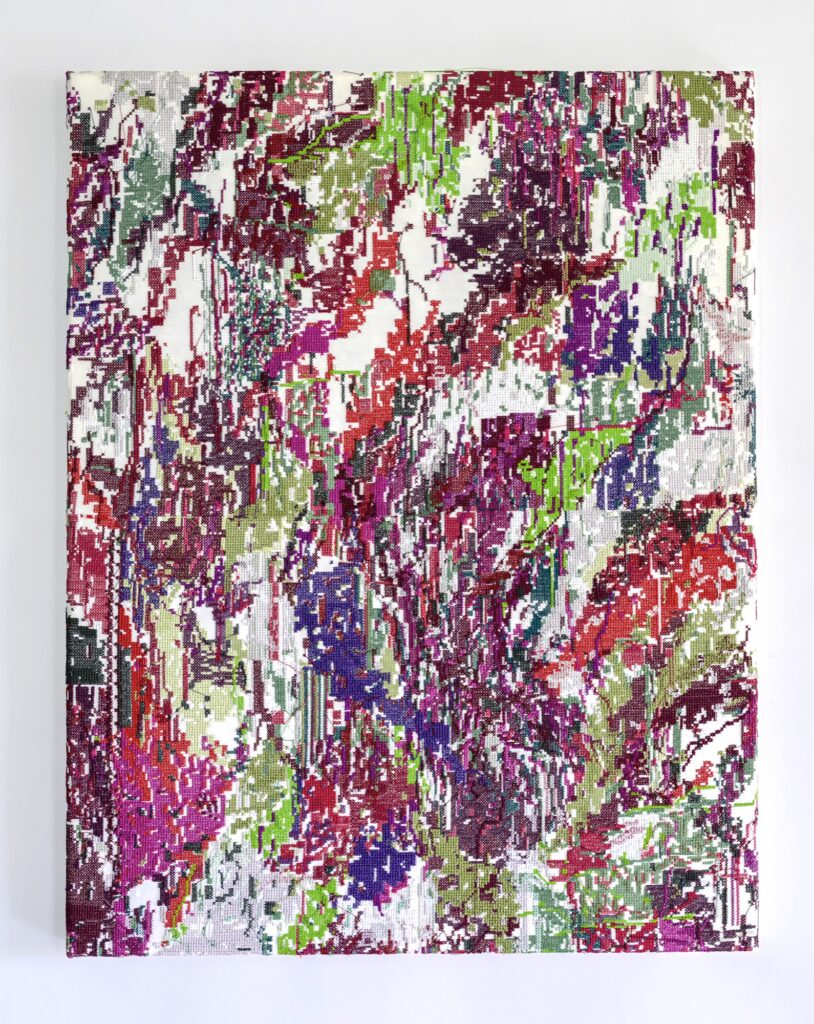


Lisette de Greeuw’s work consists of series that unfold over multiple years and develop simultaneously. She is currently working on two interconnected bodies of work.
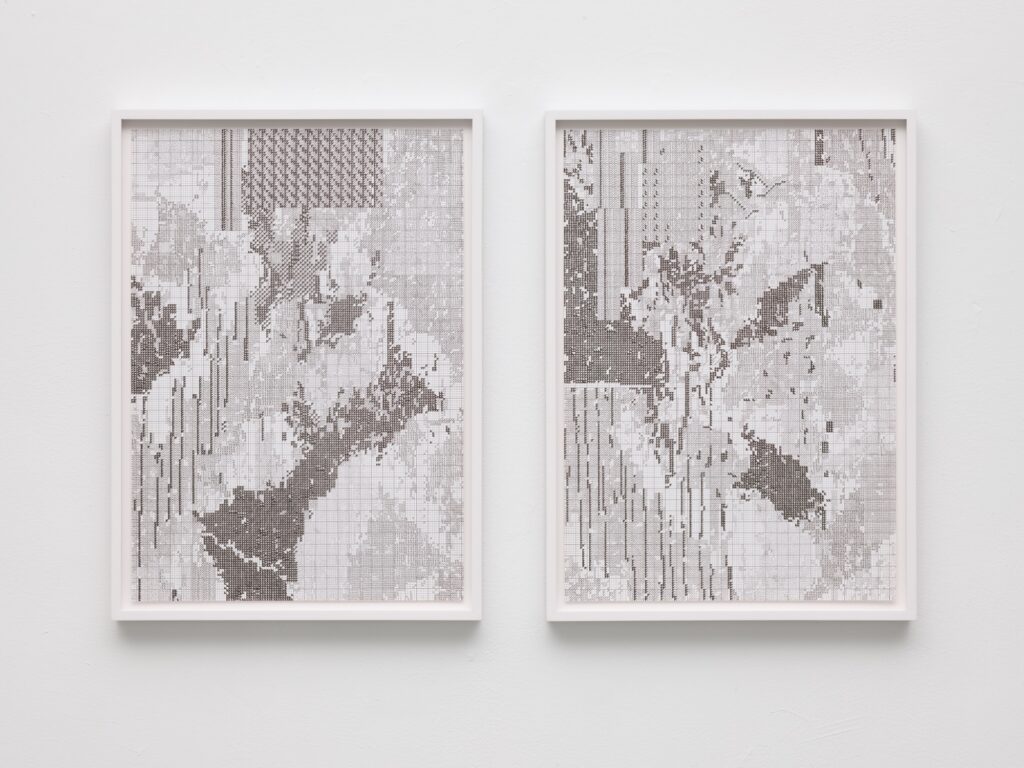
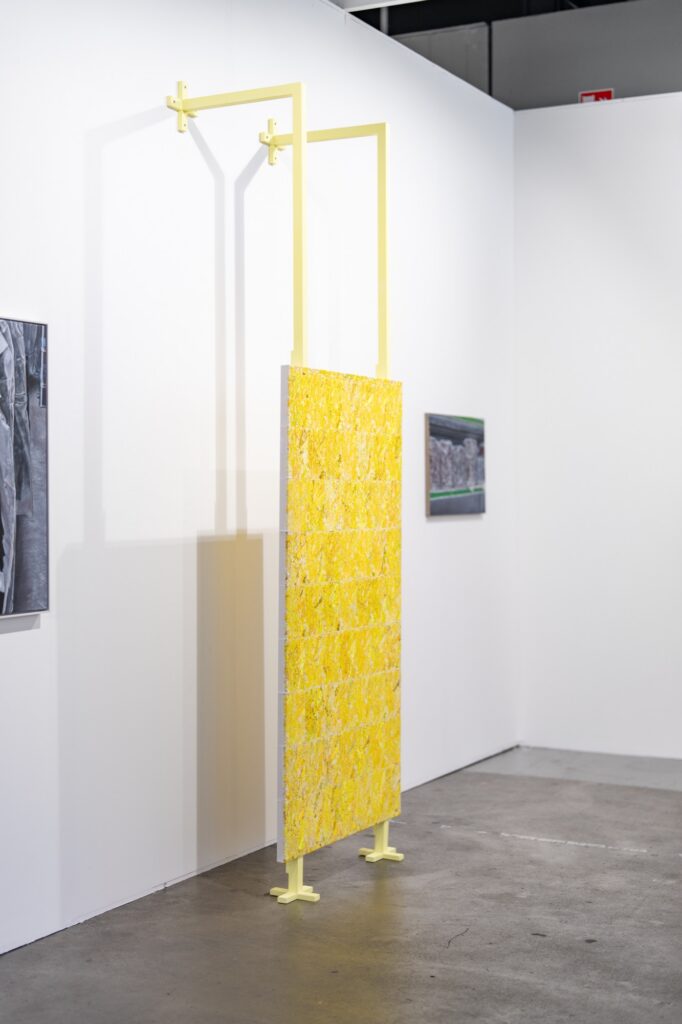
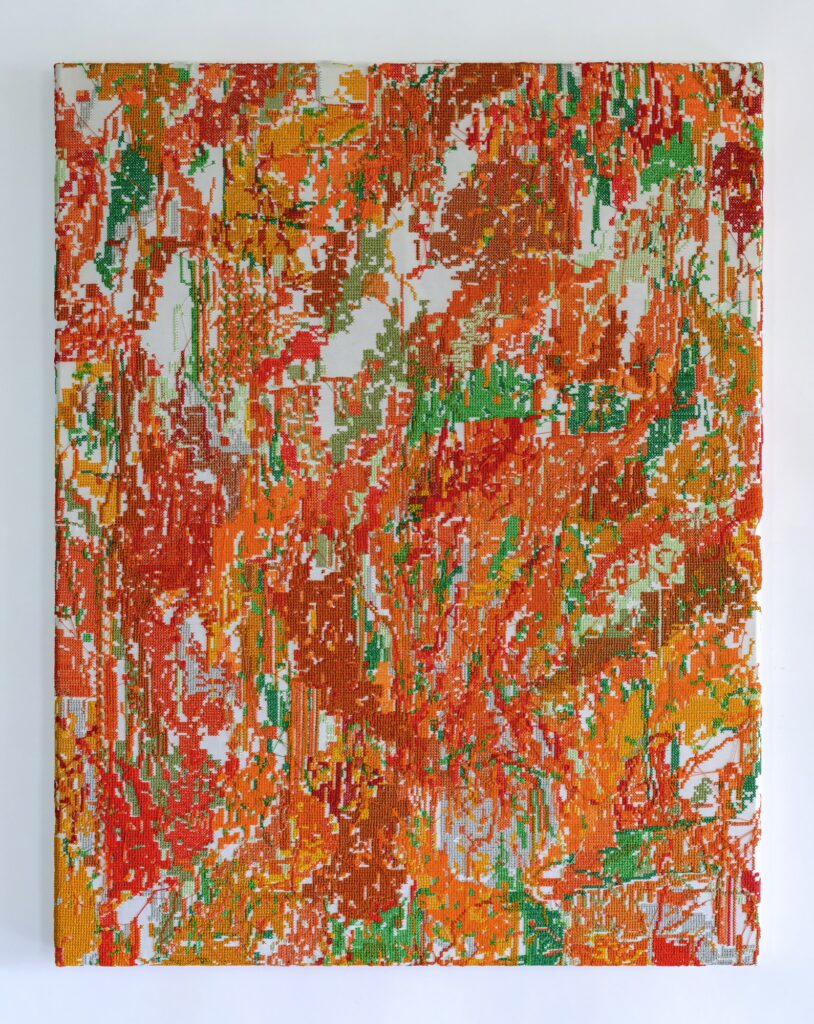
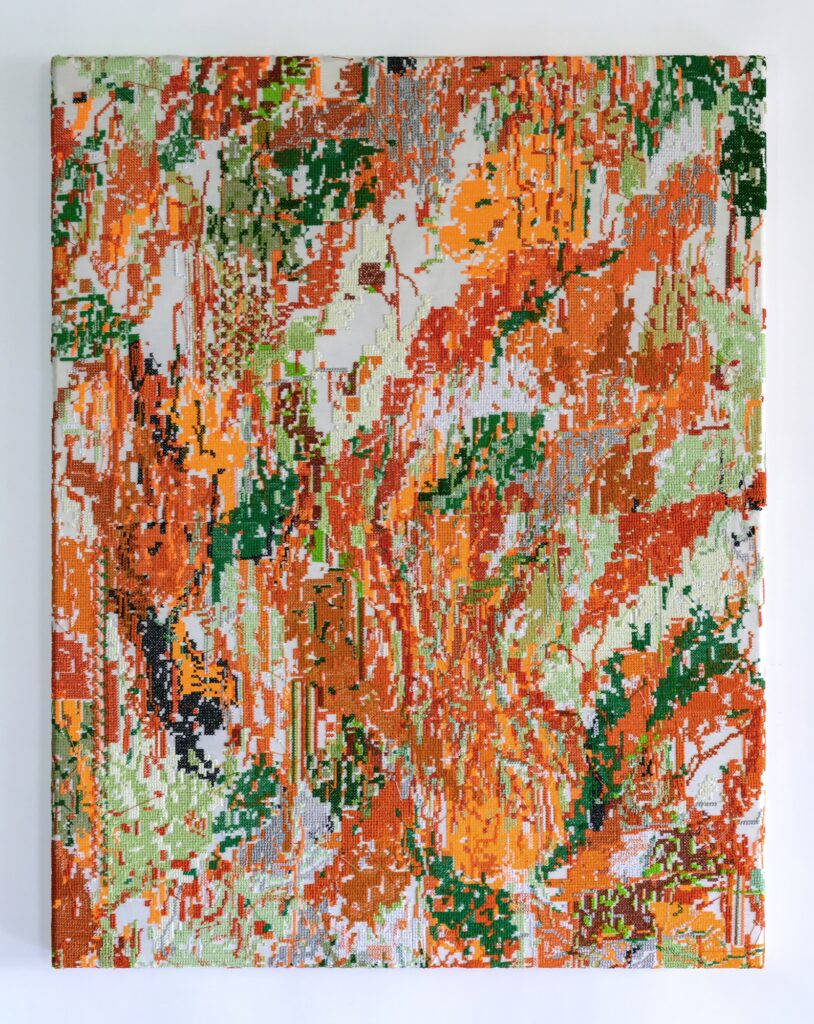
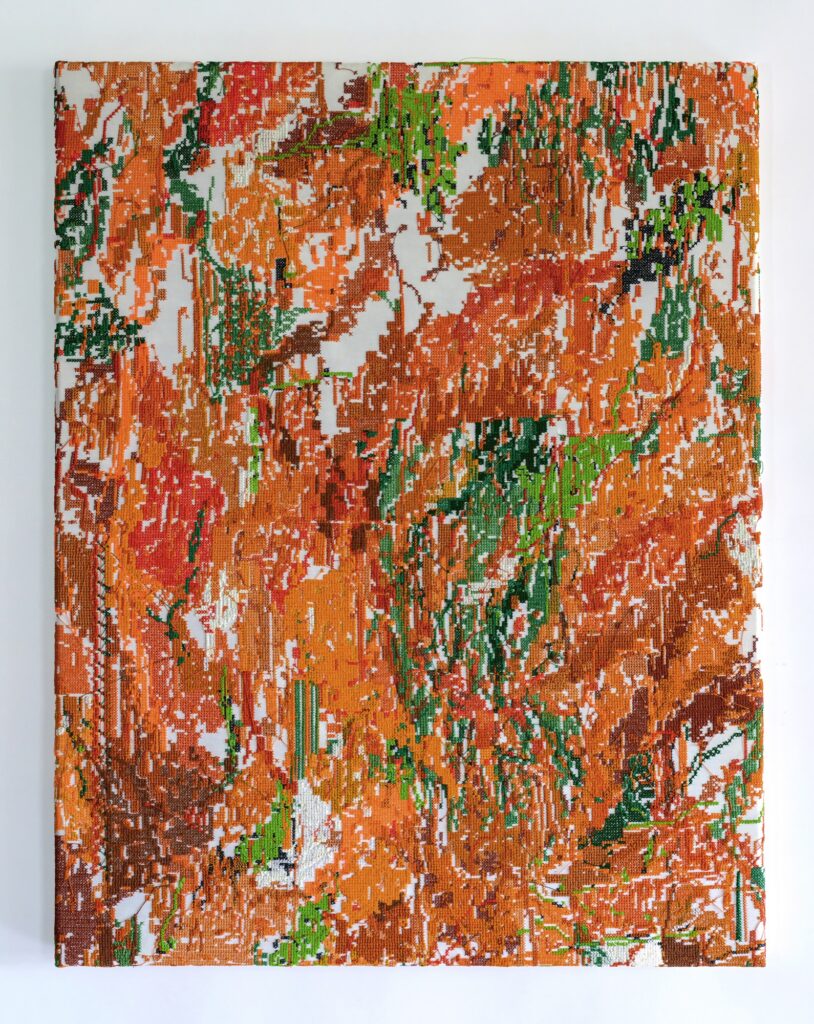
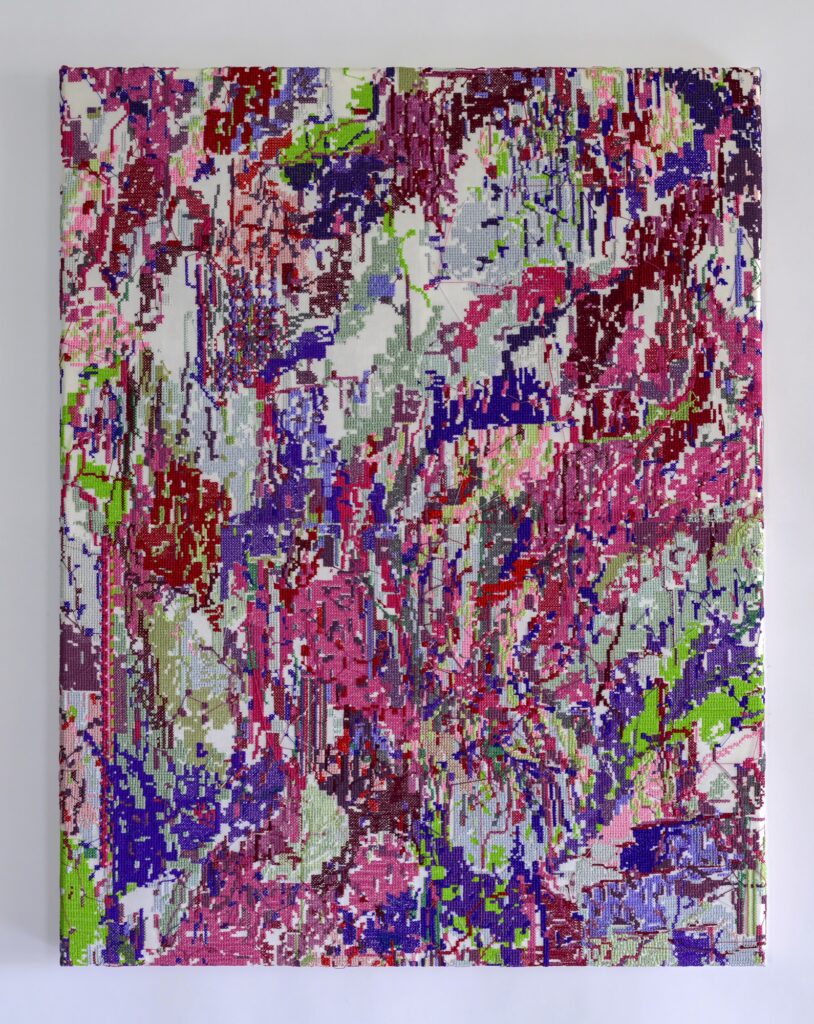
The first series emerged from observing how living in Belgium has reshaped de Greeuw’s language. In her second language, subtleties disappear and language becomes simplified. This led her to explore the relationship between textile and language, both rooted in the Latin texere, meaning “to weave”: to construct, to fabricate. She creates schematic drawings based on cross-stitch patterns, in which each sign represents a stitch in a specific color. She approaches these signs as a language: a rule-based system whose meanings are collectively defined. By translating the drawings into different forms and materials, she explores how meaning shifts through translation, returning to the question: does language shape meaning, or does meaning shape language?
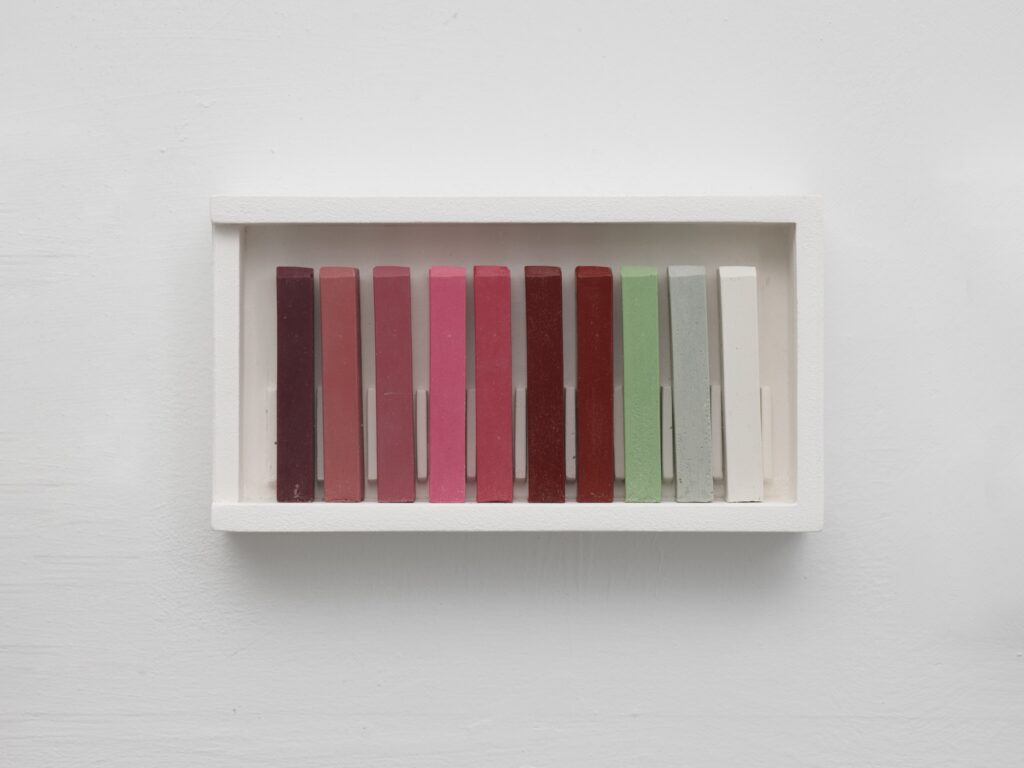
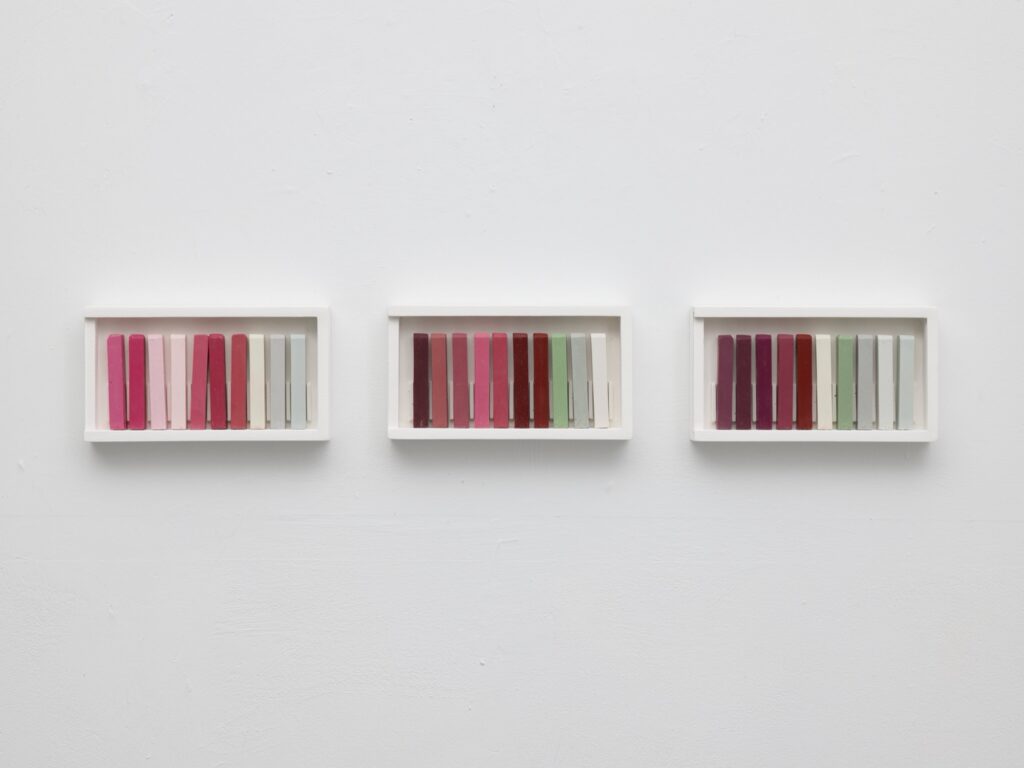
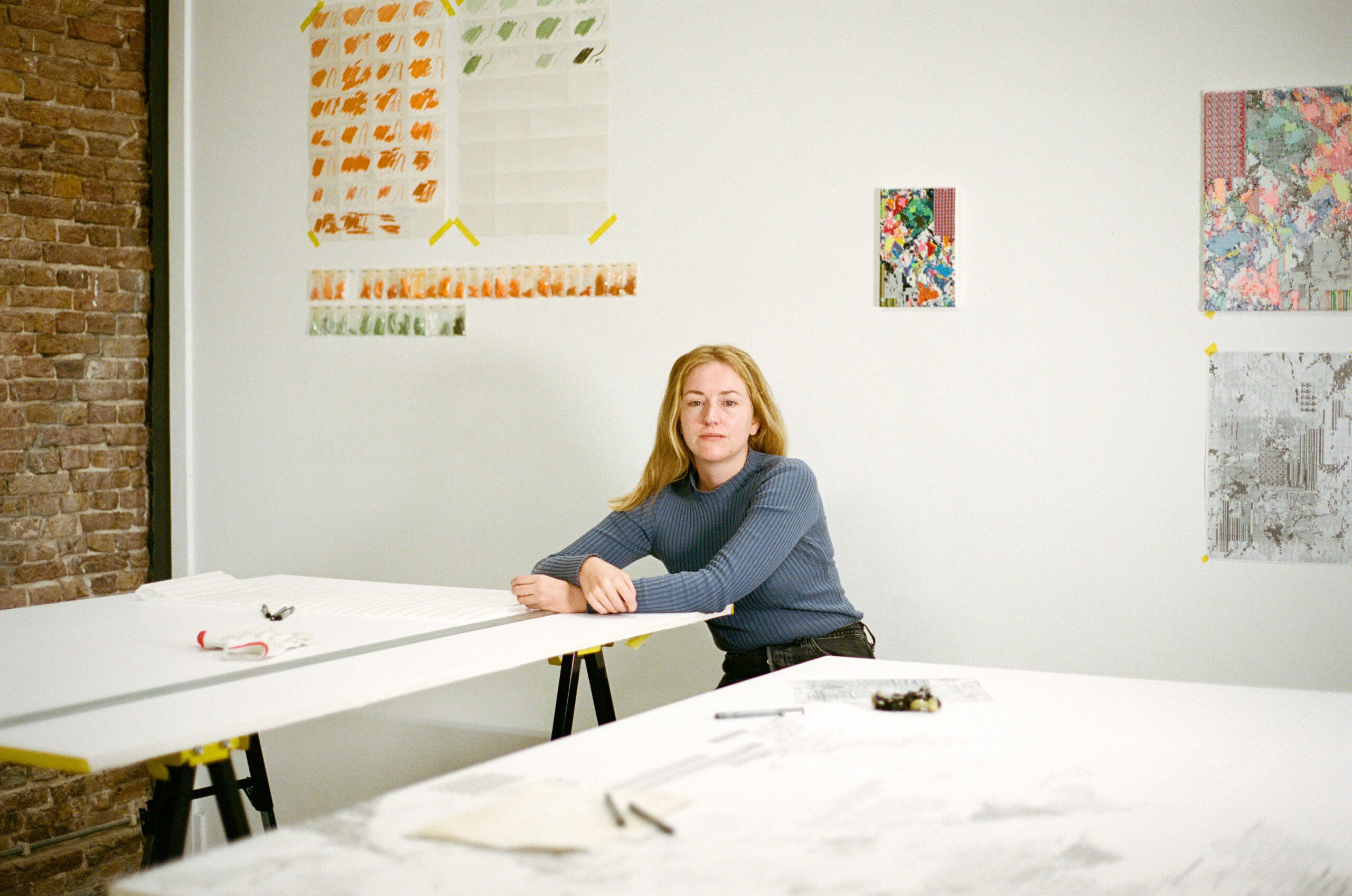
The second series began with the question of whether the schematic drawings are merely tools towards a “final” work. This led de Greeuw to develop drawing materials as autonomous works.
One trajectory refers to a not-yet-existing image, an image the viewer must imagine or construct themselves. The other begins with existing images that are broken down into its individual colors. One work is based on the image of a moldy mandarine, whose bright orange surface is gradually overtaken by mold. As the mold spreads, the mandarine slowly disappears. From this image, de Greeuw investigates processes of transformation and decay: at what point does a mandarine cease to be a mandarine. How is it defined, and when does that definition fall apart.
Lisette de Greeuw is represented by Josilda da Coceicao Gallery (NL).